 las veces en las que más escribo poesía es cuado sé que tengo que escribir un paper. entonces, deberían dejarme escribir poesía en vez de papers, de vez en cuando, al menos.
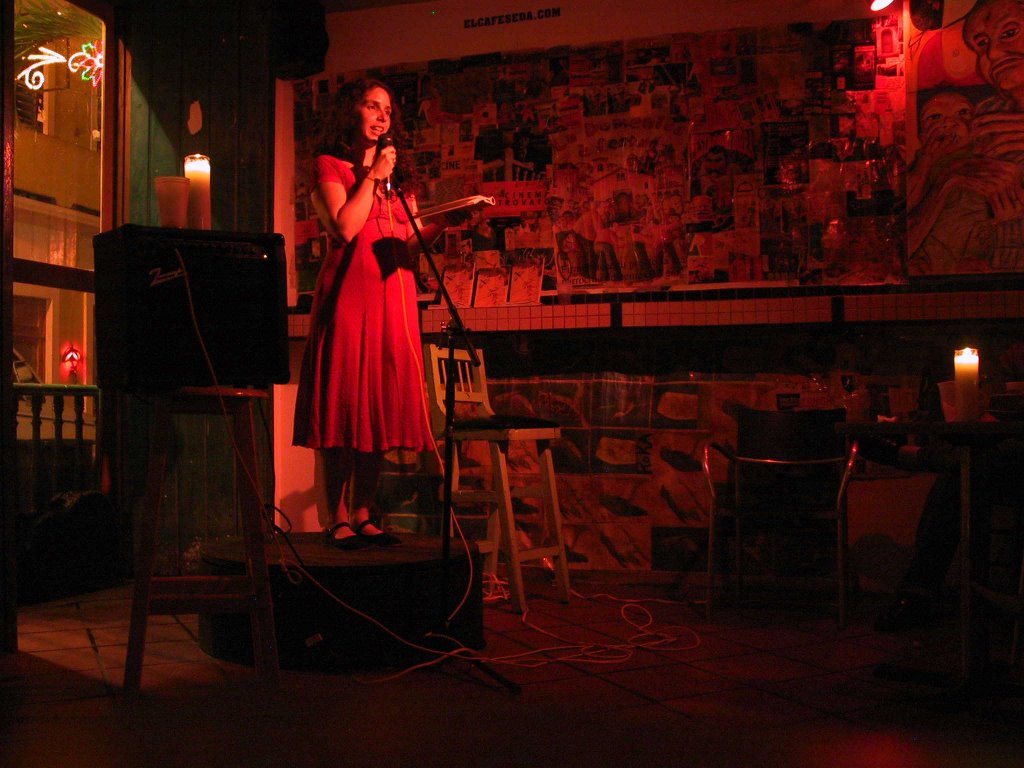
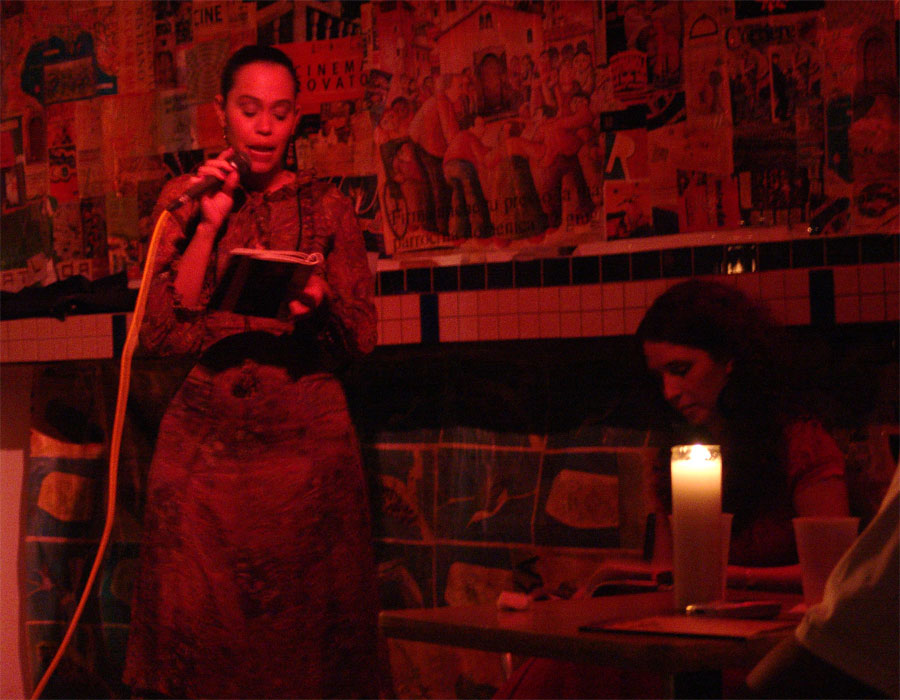
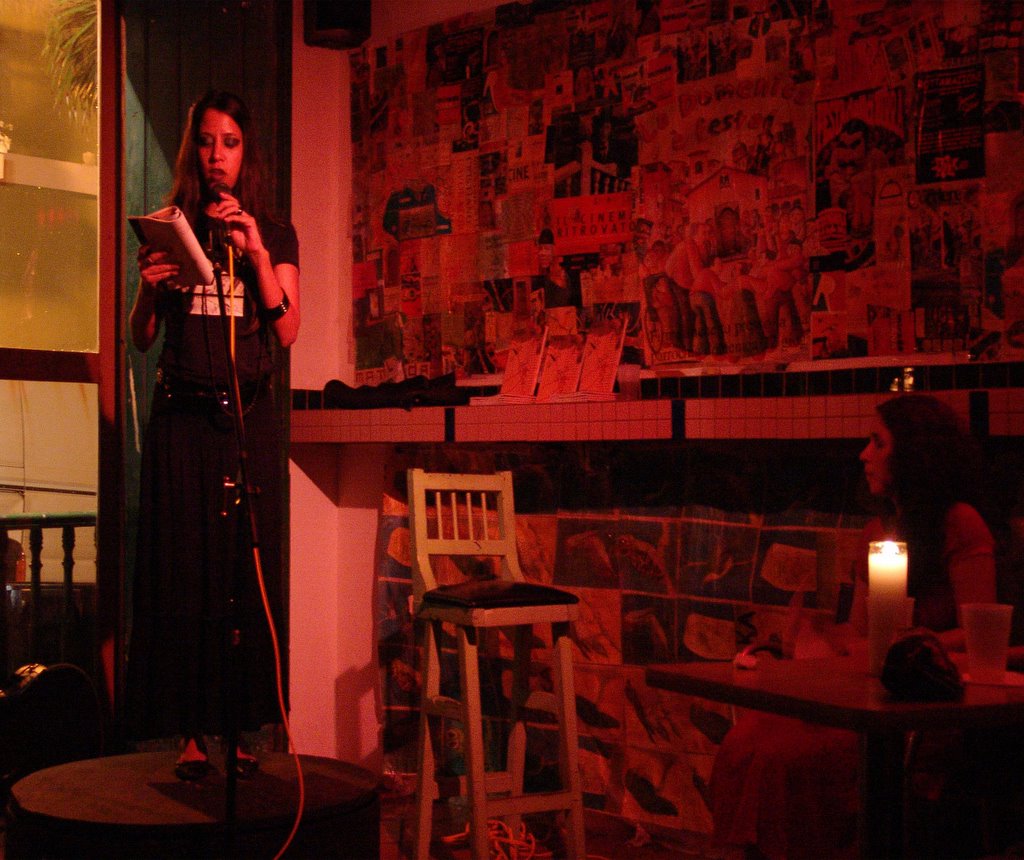
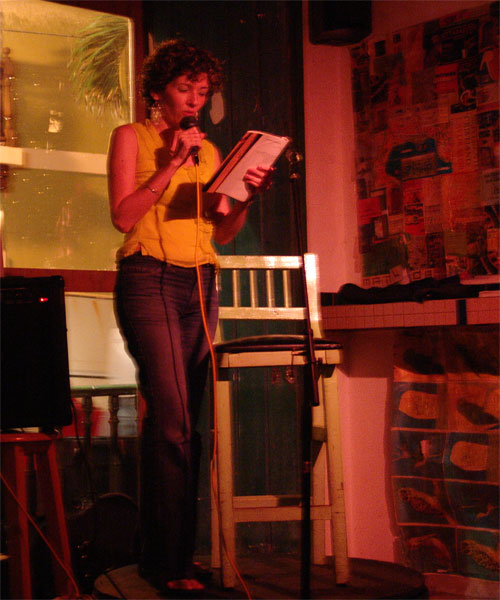
hoy leí en un panel algo que escribí relacionado con la histórica sara baartman, mejor conocida como la venus hottentot. el panel se tiulaba "beyond the body part", oraganizado por la profesora del curso de "feminismo y performance". mi paper se titulaba "rethinking the ass: the carnevalesque in suzan-lori parks venus".
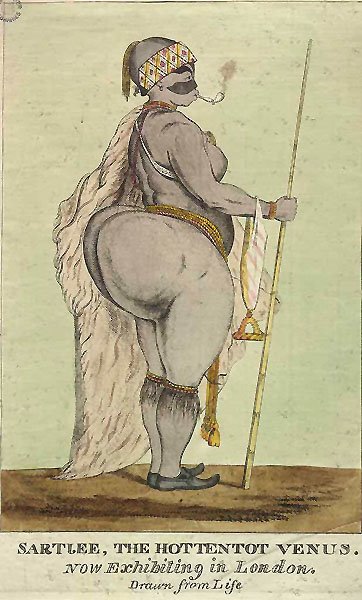
venus es una obra muy buena que me gustaría ver algún día si la montan de nuevo. por lo menos sus restos ya no están en el museo aquél en parís. aquí unos fragmentos y un pasquín del siglo diecinueve anunciando el circo:
Suzan-Lori Parks' Venus is based on an historical figure: Miss Sartje Baartman, who was born in 1789 in the Eastern Cape of South Africa. In 1810, three years after the slave trade was made illegal, William Dunlop, a doctor, convinced Baartman to go with him to England to exhibit herself in a show of oddities in the English carnival circuit. He convinced her that she would return rich from Europe. She accepted his offer. But Sara Baartman did not return to Africa until 200 years later. The reason: Sara Baartman was exploited as an “exotic beast”. She was sold to an anatomist who dissected and macerated her after her death.
What kind of body did Sara Baartman have? What kind of oddity was she? Sara Baartman was a black woman with a voluptuous body, a body that was not the body of a traditional European white female, a body with a big ass. In 1774, 25 years before Sara Baartman was born into the tribe of the Khoi Khoi in South Africa, Herder wrote:
How miserable when there were still nations character, what reciprocal hate, aversion to foreigners, fixedness on one’s center of gravity, ancestral prejudices, clinging to the lump of earth on which we are born and on which we are destined to rot! Native manner of thought!, narrow circle of ideas-eternal barbarism! (Herder, 329)
In this quote Herder criticizes the disturbing notion of civilization that had provoked “this seemingly straightforward tale of exploitation."(Basting, Anne Davis, 223) Sara Baartman was the Other. She was treated like a beast. She was sold twice, first in England and then in France. She was exploited to fake herself; she was exploited to act as an “exotic beast,” as the “Hottentot Venus”.
Many postcolonial Caribbean writers have used the carnivalesque to criticize the ways in which the colonizer stereotypes and simplifies the colonized. My goal with this paper is to insert Parks into that tradition, and to create a dialogue between this African-American writer and Caribbean writing which uses similar strategies. An instructive example from the Caribbean tradition is the playwright Aimé Césaire, who wrote a play based on Shakespeare’s The Tempest, in which the Carnivalesque works as an strategy to subvert the imaginary construction of the character Caliban, who represents the stereotyped of the “savage”, the idea of a uncivilized cannibal.
Caliban is what Retamar called a “conceptual-metaphor” (Retamar 89) that constitutes the construction of the stereotype of the colonized. Shawn Marrie-Garret has noticed that Parks’ use of Venus is a reinterpretation of the stereotype of the Black-American woman (Garret 39). In this sense, Césaire and Parks' efforts have in common the intention of exorcizing the “conceptual-metaphor” of a tradition that linked their ancestry with oddity and inferiority.
Suzan-Lori Parks’ Venus creates an interesting dialogue with postcolonial studies, which, as Homi Bhaba has observed, rewrites history in an effort to redeem the image of the colonized. To conceive a play in which a silenced historical character like the Hottentot Venus not only has a voice but, moreover, has the ability to learn different languages, is just one example of how Park’s play subverts the predominant stereotype that simplifies Sara Baartman's historical role. This is clearly an inversion of what is expected, and as such an example of Carnivalesque transgression. Parks de-links Venus from oddity and inferiority not necessarily by empowering the character within the play, but by portraying the anatomist as the beast. Parks’ play displaces the stereotype that Western culture traditionally has about the “other” by giving the qualities of the “savage” to the characters that represent the English carnival visitors and the French Anatomists. Parks' play both subverts the stereotype and parodies the mechanism in society that produces it.